
As you delve into the realm of new house siding cost, a myriad of factors come into play. From the various siding materials available to the impact of labor costs, this topic offers a wealth of insights for homeowners looking to revamp their abode.
Let's uncover the nuances and intricacies surrounding the cost of house siding.
Breaking down the average costs, exploring cost-saving tips, and considering hidden expenses, this discussion aims to equip you with the knowledge needed to make informed decisions about your home's exterior.
Factors Influencing New House Siding Cost
When considering the cost of new house siding, there are several factors that come into play. These factors can include the type of siding material chosen, the size of the house, labor costs, and additional features like insulation. Understanding how these factors influence the overall cost can help homeowners make informed decisions when it comes to siding their homes.
Types of House Siding Materials
Different types of house siding materials come with varying price tags. Some common options include:
- Vinyl siding
- Fiber cement siding
- Wood siding
- Aluminum siding
- Brick or stone veneer
Size of the House
The size of the house directly impacts the cost of siding. A larger house will require more materials and labor, resulting in a higher overall cost.
Impact of Labor Costs
Labor costs play a significant role in the total price of new house siding. Factors like the complexity of the installation, location of the house, and labor rates in the area can all influence the final cost.
Additional Features like Insulation
Incorporating additional features like insulation can increase the cost of new house siding. While insulation can improve energy efficiency and provide added benefits, it does come with an additional expense that homeowners should consider when budgeting for their siding project.
Average Cost Breakdown of Different Siding Materials
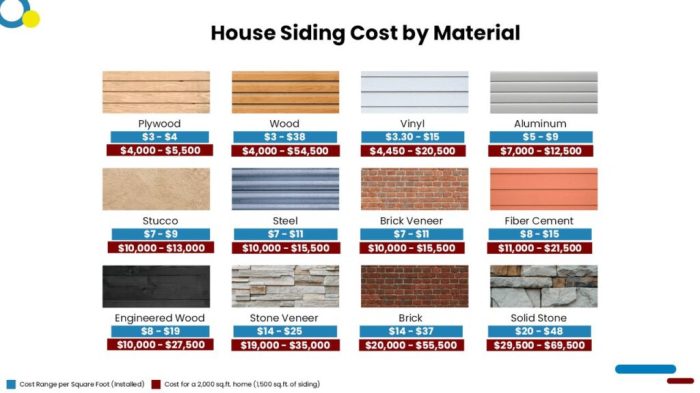
When considering new house siding, it is crucial to understand the average cost breakdown of different siding materials to make an informed decision that aligns with your budget and preferences.
Vinyl Siding
Vinyl siding is a popular choice due to its affordability, costing around $2 to $7 per square foot. Installation costs typically range from $4 to $8 per square foot, making it a cost-effective option. Maintenance expenses are minimal, requiring occasional cleaning with soap and water.
In the long term, vinyl siding is durable and can last up to 20-40 years with proper care.
Wood Siding
Wood siding provides a natural and timeless look but comes at a higher cost of approximately $6 to $12 per square foot. Installation costs can range from $5 to $10 per square foot due to the craftsmanship required. Maintenance for wood siding involves regular painting or staining, which can increase long-term costs.
With proper maintenance, wood siding can last 20-30 years.
Fiber Cement Siding
Fiber cement siding offers the appearance of wood but with lower maintenance requirements and costs. The average cost ranges from $5 to $12 per square foot, with installation costs falling between $6 to $12 per square foot. Minimal maintenance is needed, with occasional painting every 10-15 years.
Fiber cement siding is highly durable and can last 50 years or more.
Cost-Saving Tips for New House Siding
When considering new house siding, there are several strategies you can implement to save costs and stay within your budget. From negotiating with contractors to exploring DIY options, here are some tips to help you cut down on expenses.
Strategies to Negotiate with Contractors
- Obtain multiple quotes from different contractors to compare pricing.
- Ask if there are any discounts available for paying in cash or scheduling off-peak installation times.
- Consider bundling other home improvement projects with your siding installation for a better deal.
- Discuss the possibility of using leftover materials from previous projects to reduce costs.
DIY Installation to Reduce Overall Costs
- If you have the skills and tools, consider installing the siding yourself to eliminate labor costs.
- Research tutorials and guides to ensure proper installation and avoid costly mistakes.
- Recruit friends or family members to help with the installation process to expedite the project.
Energy-Efficient Siding Options for Long-Term Savings
- Opt for insulated siding materials to improve the energy efficiency of your home and reduce heating and cooling costs.
- Choose materials with high R-values to enhance insulation and minimize energy loss.
- Explore options like vinyl or fiber cement siding, known for their durability and energy-saving properties.
Potential Tax Credits or Rebates for Choosing Certain Siding Materials
- Check with local and state authorities to see if there are any tax credits or rebates available for installing energy-efficient siding.
- Research federal programs like the Residential Renewable Energy Tax Credit for potential savings on eligible siding materials.
- Consult with your contractor to ensure that the chosen siding meets the requirements for any available incentives or rebates.
Hidden Costs to Consider When Budgeting for New Siding
When planning for new house siding, it's crucial to consider not only the upfront costs but also the potential hidden expenses that may arise during the project. These additional costs can impact your overall budget and should be factored in from the start to avoid financial surprises.
Trim Work, Removal of Old Siding, or Repairs
Before the new siding can be installed, there may be a need for trim work, removal of old siding, or repairs to the exterior of your home. These tasks can add to the overall cost of the project, so it's important to budget for them accordingly.
Permits and Inspection Costs
Obtaining permits and scheduling inspections are essential steps in the siding installation process. These costs can vary depending on your location and the type of siding being installed. Be sure to include permit fees and inspection costs in your budget to avoid any delays or additional expenses.
Unforeseen Issues During Installation
During the installation of new siding, unforeseen issues may arise that require additional materials or labor to address. These unexpected challenges can impact your budget, so it's wise to set aside a contingency fund to cover any potential surprises that may come up during the project.
Budgeting for Contingencies
To avoid financial surprises, it's recommended to budget for contingencies when planning for new house siding. Setting aside a buffer of around 10-20% of your total project cost can help cover any unforeseen expenses that may arise, ensuring that you stay within your budget throughout the entire process.
Wrap-Up
In conclusion, understanding the cost implications of new house siding is vital for any homeowner embarking on a renovation journey. By being aware of the various factors influencing pricing, you can navigate this process with confidence and foresight. Whether it's negotiating with contractors or factoring in hidden costs, arming yourself with this knowledge ensures a smooth and cost-effective siding project.
Key Questions Answered
What are the most common types of house siding materials?
Common types include vinyl, wood, fiber cement, and metal.
How does the size of the house affect the cost of new siding?
Generally, larger houses require more materials and labor, leading to higher costs.
Are there tax credits or rebates available for choosing certain siding materials?
Yes, some energy-efficient siding options may qualify for tax incentives.
What are some hidden costs to consider when budgeting for new siding?
Additional expenses like trim work, removal of old siding, and permit costs should be factored in.
How can DIY installation help in reducing overall siding costs?
DIY installation eliminates labor costs, saving money in the process.